
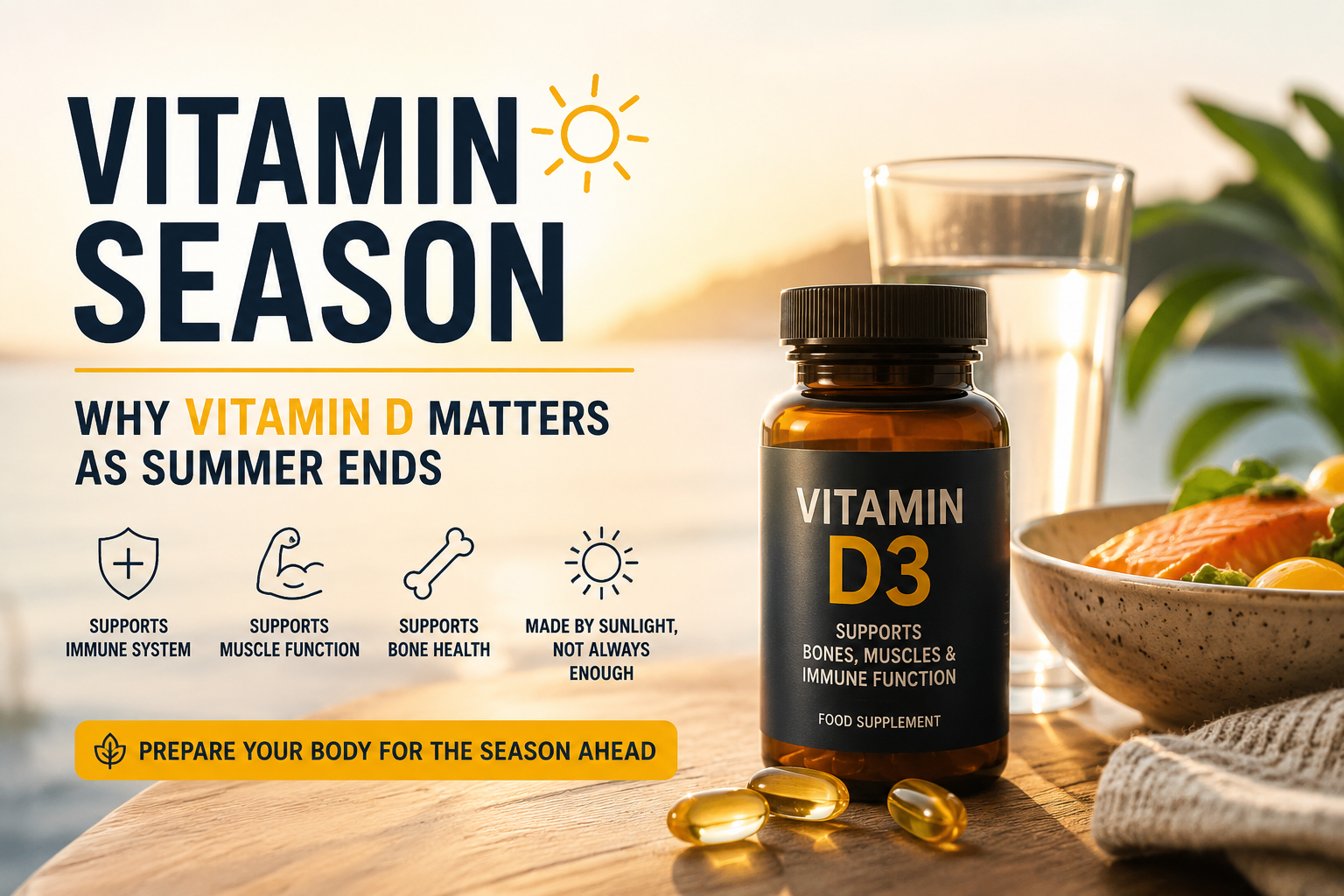
As summer comes to an end, many people start spending more time indoors. Days become shorter, routines return to work, school and training, and sunlight exposure often decreases.
That makes this a good time to talk about Vitamin D.
Vitamin D is often called the “sunshine vitamin” because the body can produce it when skin is exposed to sunlight. But depending on where you live, your skin tone, how much time you spend outside, the season, your clothing, and your lifestyle, it may be difficult to get enough from sunlight alone.
Why Vitamin D matters
Vitamin D helps the body absorb calcium and phosphorus, which are important for strong bones and teeth. It also supports normal muscle function and immune system function. Low Vitamin D levels can affect bone health, and some people are more at risk of not getting enough.
For active people, Vitamin D is especially worth paying attention to because it is connected to bones, muscles and general wellbeing. It is not a magic energy pill, but it is one of those basic nutrients that supports the body behind the scenes.
Why the end of summer is a good reminder
After summer, many people feel they have had enough sun. But as the season changes, sunlight becomes less available, people spend more time indoors, and daily routines often become busier.
That is why “vitamin season” is a useful reminder: prepare your body before the darker, colder months arrive.
In many countries, public health advice recommends considering Vitamin D during autumn and winter, especially when sunlight exposure is limited.
Who may need extra attention?
Vitamin D may be especially relevant for people who:
-
spend a lot of time indoors
-
train mostly indoors
-
cover most of their skin when outside
-
have darker skin
-
live in places with long winters or limited sunlight
-
do not eat much fish, eggs or fortified foods
-
follow a vegan or mostly plant-based diet
-
are older adults
-
are pregnant or breastfeeding
People with medical conditions, kidney disease, thyroid/parathyroid issues, pregnancy, breastfeeding, previous deficiency, or medication use should speak with a healthcare professional before taking higher doses.
Food helps, but sunlight and supplements may still matter
Some foods contain Vitamin D, including fatty fish, egg yolks and fortified foods such as some dairy or plant-based products. But food alone may not always be enough, especially when sunlight exposure is low.
That is why many people choose a Vitamin D supplement as part of their autumn and winter routine. The key is to use it sensibly and follow the recommended dose on the label.
More is not always better. Very high Vitamin D intake can be harmful, so it is important not to overdo it.
Our take
Vitamin season is not about panic. It is about preparation.
As summer ends and life gets busier again, this is a good time to support your body with the basics: movement, good food, sleep, hydration and the nutrients that matter.
Vitamin D is one of those small daily habits that can make sense for many people when sunlight becomes less reliable.
Support your body before the darker season asks more from it.