
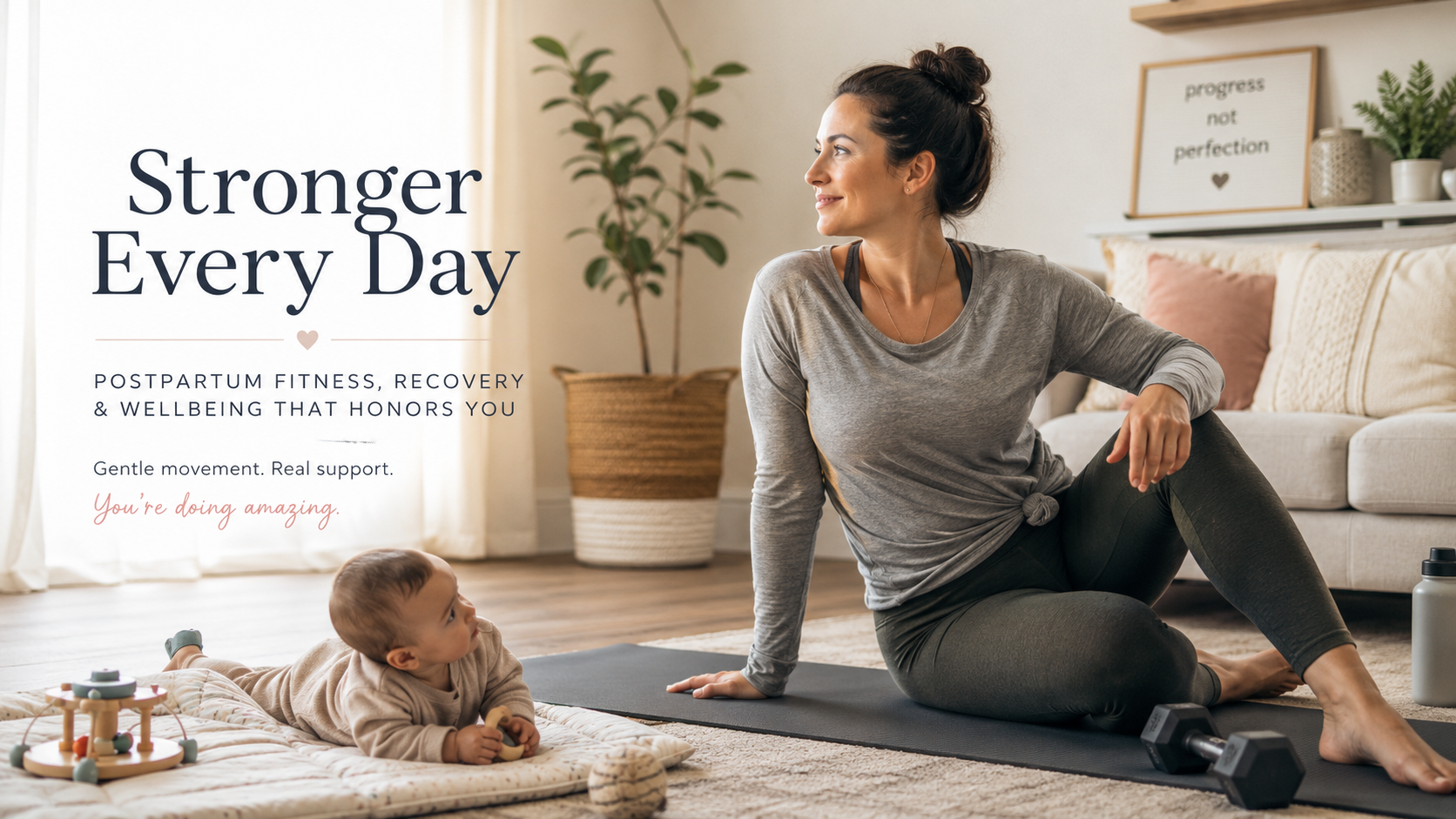
There is a lot of pressure on women after birth to “bounce back” quickly. To look the same, train the same and return to normal life as if nothing major happened.
But postpartum is not a race. It is recovery.
At Fitmatters, we believe women should be encouraged to return to exercise after giving birth, but in a paced and respectful way. The goal should not be punishment, comparison or pressure. The goal should be strength, energy, confidence, long-term health and feeling more like yourself again.
Medical guidance supports returning to movement gradually. After an uncomplicated pregnancy and vaginal delivery, many women can begin gentle exercise within a few days when they feel ready. After a C-section, complications, significant tearing or other concerns, it is important to get advice from a healthcare provider first. Sources such as ACOG and Mayo Clinic recommend starting slowly, listening to the body, staying hydrated and stopping if there is pain, dizziness or unusual symptoms.
Your body has done something major. Pregnancy and birth affect your muscles, joints, hormones, pelvic floor, core, sleep and emotional wellbeing. That does not mean you are weak. It means your body deserves care.
A good return to exercise may begin with walking, breathing, pelvic floor connection, gentle mobility and light strength work. Over time, you can build toward stronger training, better fitness and body confidence. But the foundation matters.
Strong recovery is better than “bouncing back.”
Do not compare your journey to another woman’s body or timeline. Every woman has different genetics, support at home, sleep, birth experience, mental load and recovery needs. Some women have help. Some are doing nights alone. Some recover quickly. Others need more time. Your journey is allowed to be different.
Most importantly, do it for you. Not for society. Not for pressure. Not because anyone made you feel like your postpartum body is not good enough.
Your baby does not need you to have a “perfect” body. Your loved ones need you healthy, supported, emotionally present and strong for real life.
Postpartum wellness is not only physical. Your mental and emotional wellbeing matter too. If you are feeling persistently low, anxious, overwhelmed, disconnected or unlike yourself, please speak to a healthcare professional. Postpartum depression and anxiety are real, common and treatable.
To every woman in her postpartum season: you are not behind. You are not lazy. You are not failing because your body changed. You are recovering from one of the biggest transitions of your life.
Start where you are and ask for help when you need it. All the best!